 After a day of travelling through the Kalahari desert, which has a lot more trees than I expected, yet no perennial water anywhere
 We stopped for lunch at a lodge run by this lovely lady
 She worked with the local bushmen, or San, to create a place where you could interact with, and learn from the bushmen. Rather than simply gawk at them.
Her guest quarters consisted of mock up bushmen houses
 Gudrun and Marion inside a hut
 A group of bushmen from a local village arrived and led us off into the bush for our crash course in desert survival
 They were not simply dressed up for work, and they did not speak english
 They spoke to us with that wonderful clicky language that is impossible to emulate, and we had a translator to help us understand
 admittedly, they looked a little bit like something out of a museum
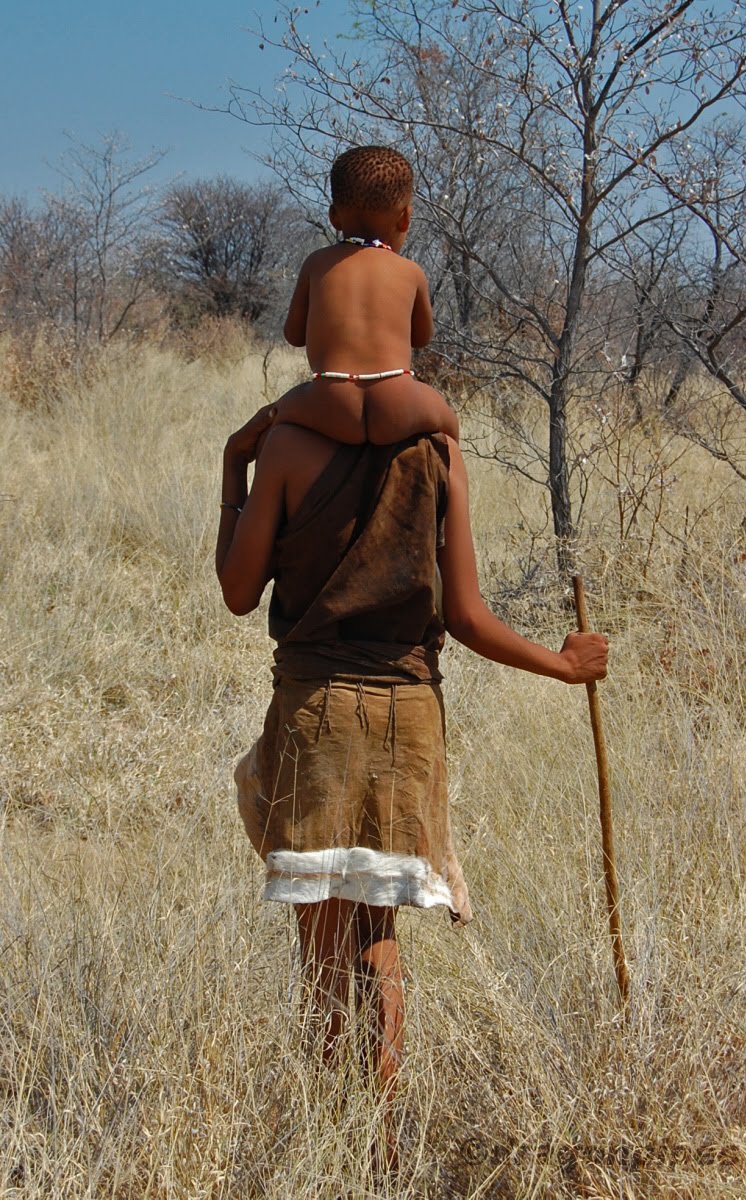
 This woman and her baby were absolutely gorgeous
 They are a tiny people, with a lighter skin that gave them the reputation as the yellow skins in historic times
 I learned a lot of really cool stuff about the plants, which I proceeded to promptly forget, of course
 These were hard to forget though. They told us they use these seeds to help the children learn the bushman language. All those clicks and pops are hard even for them to learn you see. So, they put this seed under the tongue of the child and tell them to say 'kong'. So, try it now. Boy was that a shock as the seed explodes. Definitely helps add emphasis to your 'k!ong' for sure.
 This woman is 74 years old. Amazing, isn't it?
 These two men were rather handsome, don't you agree?
 Photogenic people, for sure




After our lessons in plant life, they stopped in the shade
 The boys taught us how to make fire
 The ladies taught us how to get water out of roots
 This was an amazingly simple musical instrument. A feather on a string. By swinging it around, they could make some really fun rhythms and sounds
 Ostrich egg water container
 What an adorable baby girl


